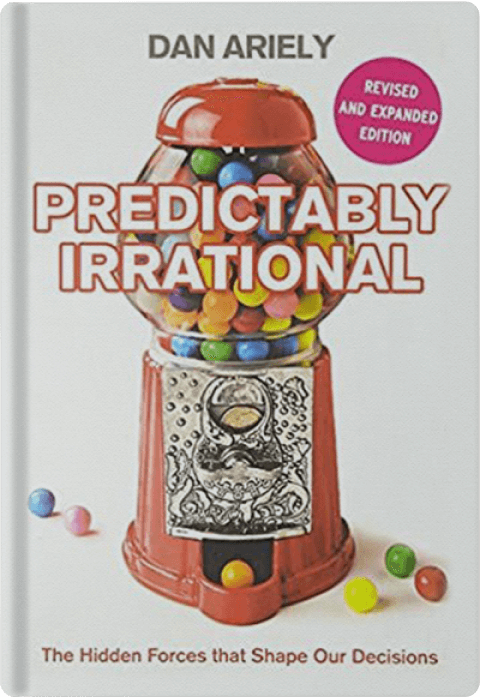
A marvelous book that is both thought provoking and highly entertaining, ranging from the power of placebos to the pleasures of Pepsi.
- Jerome Groopman
Can it be that we focus too much on gas prices? Relative to other increases in expenses, I suspect that we do!
24 Comments
Mary K. in Rockport
I find the incremental and constant increases in health insurance premiums to be both bigger and more alarming. We are held hostage to those costs, particularly if we have families, but we can choose to 1)drive less, 2) consolidate trips in the car, and 3)cram in more passengers for more or less the same price per trip. So the rise in gas price bothers me less.
First thing, the 12K miles often quoted is per car. Per family it was (1994) 21K miles per family … expanding to 30K miles for families with teens, and 40K miles for “affluent” families with teens (only a $50K household income).
40K miles at 25 mpg and $4/gal is $6400 per year on gasoline. That’s significant, rising above 10% of gross income
But second … I think most Americans over consume and under save. The real question might be, if they didn’t focus on gasoline, what would they really be doing? Running up the credit further?
We know food prices and shipping and other prices are going up because of fuel prices. We can explain that. Everything points to the reason of Fuel so we don’t have to think much about the reasons why…we understand.
We don’t understand the reasons the fuel prices are going up. We are given all kinds of reasons why there is nothing anyone can do about it..and yet we here of record profits being made.
People have a sense when being robbed.
As you look deeper into the speculation going on with oil futures and you find all the financial institutions involved that screwed up the mortgage & housing market…the focus becomes more clear on fuel…specifically Gas prices.
It is like a three card monte game we are forced to play…and we don’t know how to play ( like there is a way to play ). We know we are getting conned but cannot quite figure out how. It angers people…and they have zero control over it happening to them because the police officer is standing right there watching, smiling and not doing a thing.
Yes i am saying the same people who screwed up the housing industry are now allowed to manipulate the oil futures market using the same fractionalization ponzi scheme.
I don’t think it is irrational to spend more time focusing on the price of fuel.
And if enough of us begin to share our common (what you call irrational)focus we may get our politicians to stop letting the banks leverage 16 times their money to manipulate the oil futures market to try and gain back what they lost in the housing market.
Something is wrong here Dan…very wrong and people rationally sense it.
Now lets see if you can come up with a way for the average person to use your research to leverage our power to change things to get not only fuel prices down, but everything tied to it.
PS I know your research mainly benefits corporations, but wouldn’t it be cool if you became a modern day Ralph Nader showing the average Joe how to use this information for his benefit against big corporations and big brother?
Sounds like a great niche market to me.
I am a numerical cognition researcher who does automotive marketing for a living.
I think that any to this question will be complex and have to address the mental effects associated with creating a commodity out of objects we purchase.
Some things I buy are commodities–they are the same from one place to another and the quality does not vary appreciably. This causes fixation on the item’s price and a strong mental representation. I KNOW the price of milk, gasoline, and other standard consumables. Conversely, I might overpay by $500 on a one-off expense (e.g., a home repair or automobile purchase) and not think about it because I do not have a representation of what that price SHOULD be.
I instantly PERCEIVE the differences in a commodity. I posit that commodities form a standard from which I can easily judge relative prices. Such comparisons directly affect my emotions and behaviors before I even process the price to the point of conscious recognition (see the work of Stanislas Dehaene for experimental demonstrations of this effect).
We have very well-established expectations for gasoline and the representations are strong. Everyone is an expert. I assume that carpenters will remember lumber prices 20 years ago much in the same way that drivers remember how much gasoline cost 20 years ago, but that the weekend home repairman will not remember his one-off purchase of lumber from 20 years ago.
It is all about what we form and maintain representations of.
Whether these representations are ADAPTIVE is another issue entirely. My guess is that the representations (and associated emotions) inspire very irrational behavior (e.g., burning a gallon of gas to get to a station to save 5c or taking a $6,000 hit on a trade-in to save $300/yr on gasoline).
Another reason gas prices are so over focused upon is, gas prices are posted EVERYWHERE on HUGE signs. The price increases are in our face. Not everyone eats the same food and we don’t necessarily have the increase in food prices in our faces every day, also foods are differentiated products so we can say “well the price of macaroni went up, but maybe thats because of this store or this type of macaroni”. Gas is one thing one price no matter where. The changes are clear and in our faces.
Does anyone like rising prices? I suspect not. I agree completely with Mark – the price of everything associated even remotely with fuel is going up because of fuel and we UNDERSTAND that.
I don’t know if people are as concerned with the price of fuel as Dan seems to think. I think people are getting frustrated by the increasing costs of everything which results in less discretionary income. We are an instant gratification society and so it is the pinch in the pocket that is really getting people agitated.
I like and agree with most of NielB’s comments, but let’s do some math. He says “or taking a $6,000 hit on a trade-in to save $300/yr on gasoline”
Who would be saving $300? Let’s try to back-calculate, assuming a moderate move from a 15 mpg suv to a 25 mpg small car. For every 1000 miles driven the 15->25 move saves 27 gallons. At $4 that’s $108 per 1000 miles.
someone who saves only $300 is only driving 3000 miles per year.
As we saw in my notes above, typical familes are far above that. At 21K miles (family average) the switch down 15->25 would be about $2268 … and for that middle class family with teens it would be $4320.
And of course those are per-year recurring costs, and not the one-time hit of a car change.
So maybe there is a middle ground? Maybe this IS a serious enough issue for a reconsideration of usage patterns … without being the end of the world.
odograph-
Are you using the savings per gallon of gasoline on mileage from all cars in the family?
Certainly all the cars are not getting improved mileage because you traded one vehicle for one of the better mileage cars.
I believe that families with teens driving means a three car family- or more-
You are not getting the better mileage on all cars- only one.
So that cuts considerably into the gain in gas savings.
Strictly speaking- if you are ready to buy a car- buying a better mpg vehicle is a good idea. But, trading and spending more for a vehicle you did not need- is not the best option.
Interesting topic. I can think of many reasons we focus heavily on gas prices, like (as above) the in-your-face prices listed at every gas station, and the things Dan outlined in the video. I could add a few others, too, like the fact that we often enjoy having a common enemy. I can moan about gas prices to any stranger I may meet on the street and get an immediate sympathy nod. I can compare how much it takes to fill my tank to how much my friends are spending per tank and they understand me. But more than this, I think that paying $60 per tank while the oil companies are posting record profits smackes strongly of injustice and brings to the surface feelings that the rich are getting richer while most of us are working harder while getting poorer.
We must consider what $60 may mean to different people. It’s quite a lot to me, and paying that much at the gas station means that I need to cut out things I had previously enjoyed — no more trips to Starbucks, no movies except Indiana Jones, etc. For people with more disposable income, $60 at the gas station won’t put any kind of dent in their standard of living. And for others, $60 in the gas tank will mean quite drastic changes, less desirable food at the market, having to choose between filling the tank and buying heating oil, putting off trips to the dentist, and so forth. These are certainly not trivial things. Sure, if you’re only talking about that class of people that has health insurance, I might agree that gas increasing prices aren’t as important (i.e., as prohibitively expensive) as some other increases in costs that we face. There are many, many people, however, that have incomes far below that which you seem to take as a matter of course.
What is most fascinating about the rise in oil prices is the level of surprise that the media and the public have regarding this matter. There are at least two ways to view what is going on as nothing new or sinister.
First, with the decline in the value of the dollar we’re bound to see the cost of most imports rise. Second, MARK asserts that financial market manipulation is largely responsible for the wild swings in the price of commodities. Nothing could be farther from the truth, we have too much history to demonstrate this. For example, in the period from 1972 to 1980 the price of commodities rose significantly just as the real estate bubble for that era was deflating. For more illumination on this topic survey the Florida condo prices in 1974 and the massive declines in price.
Also, MARK suggested that the publisher of the blog should find ways for the average person to benefit or get around the current market phenomena. In reality, it is predictably irrational behavior that puts the majority of the citizenry in the position of “being the victim” of the circumstances. In theory, all that is really needed to get around this problem is to reduce spending as the price goes up and accumulation when the price goes down. In the world of transportation this means riding your bicycle when prices are high and driving your car when prices are lower. However, most Americans aren’t easily swayed from driving their cars. I won’t believe that gas prices are high until I see more bicycles on the road and fewer SUVs.
Another matter of concern that is disturbing is this resounding belief that there is a such thing as peak oil. All the evidence points to just the opposite. Back in the early 1970s it was believed that we would run out of oil by 1986. However, not only did we consumer the amount of oil thought to be in existence, the amount of proven reserves tripled during that same period from 1972 to 1980.
Some would assert that after all the consumption that has taken place we must be at the end of the road. This was said of coal, which it has been determined we have a 400 year supply. The same was said of whale oil, which we now have the largest population of whales sought after for their oil. Finally, the peak wood experienced in Europe of the 1500s was thought to be irreversible. However, a treeless Europe was reversed over time.
Unwillingness to examine the evidence attest to the fact the our decisions are predictably irrational. All this despite the fact that we have the collected knowledge of countless generations.
Dear Dan:
We Americans we love our cars! In fact, I believe we love them more than our mates!
Think about the old GM commercial with the mechanic Mr. Goodwrench who is “my man” to a young girl in a car.
People hate to lose their car and the fact that they may lose that “freedom” bugs the sh__t out of us!
So focusing on fuel prices takes away some of the blame that belongs on us.
After all some of us can walk to work (how about you)some of us can slow down (35-45 mph is supposed to be the most efficient, on average) and some of us can take mass transit.
BUT WE DON’T WANT TO! It is inconvenient (we could get rained on)We’d have to walk (and we are so out of shape)OR if we have to slow down so we can’t imagine ourselves as a NASCAR or INDY race car driver while weaving in and out of all the other incompetents on the road.SO WE BLAME THE GAS COMPANIES WHEN WE SHOULD BE BLAMING OURSELVES.
Isn’t this irrational behavior (denial) and what can we do about it?
I think it is very strange that the price on gas only went up AFTER a system to pay for it was in place–The CREDIT CARD AT THE PUMP. I think if the consumer was putting out $75.00 in cash, the public would be up in arms rather than just accepting what is going on.
On a related note: NPR did a story today about how people often misjudge the savings from trading up to get better MPG rating (Hint: Gallons per Mile is a better measure of the savings). http://www.npr.org/templates/story/story.php?storyId=91703607
No expert in much of anything here but I remember something of yours that talked about predictability. ha! No really I do but couldn’t name it to save by bum.
Anyway, part of what I gathered is that we freak more when we cannot predict something. Over and over again we are told that nobody knows how much oil is in the planet. Some say not enough and others say oil companies are liars. Meh, either way the consumer doesn’t know and every time we face that pump we face not being able to predict something.
But then it seems like there are even bigger unpredictable and possibly devastating things going down these days. And everyone I know is either vaguely stressed or specifically so. Perfect time to pull cons. The guy who comes up with the stress free oasis of thought wins I’ll bet. Oh wait, there are true apothecaries getting richer. I forgot.
I live in Australia, and for years the supermarket chains have had deals with the gas station companies whereby if you purchase more than some amount (usually $30) at the supermarket, then your docket entitles you to a few cents per litre off at the bowser. People stick to these deals like a religion, irrespective of the increases in prices at the supermarket. It’s totally irrational, and totally fascinating.
Petroleum is that from which most things flow….we are gas dependent and that angers a lot of us. Especially when the oli compnaies are making HUGE profits. If thegas at the pump goes up, you can be sure the cost of toilet paper is on the rise too.
Is there another effect due to round numbers? With gasoline prices starting as low as they were, it doesn’t take long before we hit a milestone. Last year it was $3/gal, this year we broke the $4/gal mark. There’s often irrational fixations on these barriers, like when the Dow Jones average first broke 10,000.
Gas has been over $4 for a week or so around here, but a couple of days ago while driving to work I passed a station that was still changing $3.99. I was very tempted to turn into it, even though my tank wasn’t empty yet and it would make me late for work, just to get that deal. But I realized that this is only about a 4 or 5 cent/gal saving from my regular gas station near home. I probably wouldn’t be able to put more than 9 gallons in, so I’d save less than 50 cents.
I also agree with NielB’s point about these being prices that we’re intimately familiar with. We frequently hear news stories about things like the price of oil, the national debt and GDP, or the total amount Americans spend on health insurance. But these numbers are meaningless to us, because we have no frame of reference to them — most of us never purchase oil by the barrel. But when you hear about designer jeans costing $200, it’s easy to relate them to the $30 jeans you can buy at the Gap.
I agree with Mark. People know that the price of gas affects everything else, even if they don’t say it first. There are very few goods we use if any that are not affected by transportation costs. So when the price of gas goes up, it also inflates the rest of our budgets. More for food, utilities, etc. I think there is a sense of unfairness – that we have few alternatives.
Most people don’t look at health care expenses like they do other expenses. First of all, hospitals don’t tell you how much things cost first. The nurse doesn’t say – would you like an aspirin – it will be $3.00. You get to find out about that charge after the fact – if you even see bill as a charge by charge summary at all. Also, very few people are going to ask if something is really necessary when it comes to taking care of a loved one. People just leave it up to the doctor’s judgment.
The insurance system doesn’t help either. People view using insurance similar to getting something for “free”. The more they use it – the more “free” stuff they get. If people were paying cash for all the services and prescriptions they would spend differently on healthcare.
Thanks for the information. Here’s my response if you find it of interest.
Commodity Trader Wall Calendar is an annual publication to help you keep track of your commodity trading activities irrespective of whichever commodities you are trading: agricultural (grains, and food and fiber), US dollar, livestock & meat, energy, precious, rare & industrial metals, other minerals and materials…. This reference tool provides with a repository of the commodity and financial futures industry event data.
When we make decisions we think we're in control, making rational choices. But are we? Entertaining and surprising, Ariely unmasks the subtle but powerful tricks that our minds play on us.
24 Comments
Mary K. in Rockport
I find the incremental and constant increases in health insurance premiums to be both bigger and more alarming. We are held hostage to those costs, particularly if we have families, but we can choose to 1)drive less, 2) consolidate trips in the car, and 3)cram in more passengers for more or less the same price per trip. So the rise in gas price bothers me less.
16 June 2008, 8:40 am
odograph
First thing, the 12K miles often quoted is per car. Per family it was (1994) 21K miles per family … expanding to 30K miles for families with teens, and 40K miles for “affluent” families with teens (only a $50K household income).
40K miles at 25 mpg and $4/gal is $6400 per year on gasoline. That’s significant, rising above 10% of gross income
But second … I think most Americans over consume and under save. The real question might be, if they didn’t focus on gasoline, what would they really be doing? Running up the credit further?
mileage data here:
http://odograph.com/?p=451
16 June 2008, 9:17 am
Mark
We know food prices and shipping and other prices are going up because of fuel prices. We can explain that. Everything points to the reason of Fuel so we don’t have to think much about the reasons why…we understand.
We don’t understand the reasons the fuel prices are going up. We are given all kinds of reasons why there is nothing anyone can do about it..and yet we here of record profits being made.
People have a sense when being robbed.
As you look deeper into the speculation going on with oil futures and you find all the financial institutions involved that screwed up the mortgage & housing market…the focus becomes more clear on fuel…specifically Gas prices.
It is like a three card monte game we are forced to play…and we don’t know how to play ( like there is a way to play ). We know we are getting conned but cannot quite figure out how. It angers people…and they have zero control over it happening to them because the police officer is standing right there watching, smiling and not doing a thing.
Yes i am saying the same people who screwed up the housing industry are now allowed to manipulate the oil futures market using the same fractionalization ponzi scheme.
I don’t think it is irrational to spend more time focusing on the price of fuel.
And if enough of us begin to share our common (what you call irrational)focus we may get our politicians to stop letting the banks leverage 16 times their money to manipulate the oil futures market to try and gain back what they lost in the housing market.
Something is wrong here Dan…very wrong and people rationally sense it.
Now lets see if you can come up with a way for the average person to use your research to leverage our power to change things to get not only fuel prices down, but everything tied to it.
Thanks,
Mark
16 June 2008, 11:44 am
Mark
PS I know your research mainly benefits corporations, but wouldn’t it be cool if you became a modern day Ralph Nader showing the average Joe how to use this information for his benefit against big corporations and big brother?
Sounds like a great niche market to me.
16 June 2008, 11:50 am
NeilB
I am a numerical cognition researcher who does automotive marketing for a living.
I think that any to this question will be complex and have to address the mental effects associated with creating a commodity out of objects we purchase.
Some things I buy are commodities–they are the same from one place to another and the quality does not vary appreciably. This causes fixation on the item’s price and a strong mental representation. I KNOW the price of milk, gasoline, and other standard consumables. Conversely, I might overpay by $500 on a one-off expense (e.g., a home repair or automobile purchase) and not think about it because I do not have a representation of what that price SHOULD be.
I instantly PERCEIVE the differences in a commodity. I posit that commodities form a standard from which I can easily judge relative prices. Such comparisons directly affect my emotions and behaviors before I even process the price to the point of conscious recognition (see the work of Stanislas Dehaene for experimental demonstrations of this effect).
We have very well-established expectations for gasoline and the representations are strong. Everyone is an expert. I assume that carpenters will remember lumber prices 20 years ago much in the same way that drivers remember how much gasoline cost 20 years ago, but that the weekend home repairman will not remember his one-off purchase of lumber from 20 years ago.
It is all about what we form and maintain representations of.
Whether these representations are ADAPTIVE is another issue entirely. My guess is that the representations (and associated emotions) inspire very irrational behavior (e.g., burning a gallon of gas to get to a station to save 5c or taking a $6,000 hit on a trade-in to save $300/yr on gasoline).
16 June 2008, 12:31 pm
Calvin Rosemond
Another reason gas prices are so over focused upon is, gas prices are posted EVERYWHERE on HUGE signs. The price increases are in our face. Not everyone eats the same food and we don’t necessarily have the increase in food prices in our faces every day, also foods are differentiated products so we can say “well the price of macaroni went up, but maybe thats because of this store or this type of macaroni”. Gas is one thing one price no matter where. The changes are clear and in our faces.
16 June 2008, 7:21 pm
Deb M
Does anyone like rising prices? I suspect not. I agree completely with Mark – the price of everything associated even remotely with fuel is going up because of fuel and we UNDERSTAND that.
I don’t know if people are as concerned with the price of fuel as Dan seems to think. I think people are getting frustrated by the increasing costs of everything which results in less discretionary income. We are an instant gratification society and so it is the pinch in the pocket that is really getting people agitated.
16 June 2008, 8:26 pm
odograph
I like and agree with most of NielB’s comments, but let’s do some math. He says “or taking a $6,000 hit on a trade-in to save $300/yr on gasoline”
Who would be saving $300? Let’s try to back-calculate, assuming a moderate move from a 15 mpg suv to a 25 mpg small car. For every 1000 miles driven the 15->25 move saves 27 gallons. At $4 that’s $108 per 1000 miles.
someone who saves only $300 is only driving 3000 miles per year.
As we saw in my notes above, typical familes are far above that. At 21K miles (family average) the switch down 15->25 would be about $2268 … and for that middle class family with teens it would be $4320.
And of course those are per-year recurring costs, and not the one-time hit of a car change.
So maybe there is a middle ground? Maybe this IS a serious enough issue for a reconsideration of usage patterns … without being the end of the world.
17 June 2008, 9:00 am
Retired from DRG I
odograph-
Are you using the savings per gallon of gasoline on mileage from all cars in the family?
Certainly all the cars are not getting improved mileage because you traded one vehicle for one of the better mileage cars.
I believe that families with teens driving means a three car family- or more-
You are not getting the better mileage on all cars- only one.
So that cuts considerably into the gain in gas savings.
Strictly speaking- if you are ready to buy a car- buying a better mpg vehicle is a good idea. But, trading and spending more for a vehicle you did not need- is not the best option.
17 June 2008, 3:33 pm
odograph
I do actually know 2 and 3 SUV families (no cars), for which a 15 MPG average is realistic.
You can run your own numbers, of course.
That’s what we should be doing rather than assuming $300 or $4000.
17 June 2008, 4:24 pm
odograph
BTW, the CONSUMPTION for a 30K mile 15 MPG family is now 2000 gallons, or at $4, $8000 per year.
Moving (one car at a time) to all-cars might be a reasonable path.
17 June 2008, 4:26 pm
Connie
Interesting topic. I can think of many reasons we focus heavily on gas prices, like (as above) the in-your-face prices listed at every gas station, and the things Dan outlined in the video. I could add a few others, too, like the fact that we often enjoy having a common enemy. I can moan about gas prices to any stranger I may meet on the street and get an immediate sympathy nod. I can compare how much it takes to fill my tank to how much my friends are spending per tank and they understand me. But more than this, I think that paying $60 per tank while the oil companies are posting record profits smackes strongly of injustice and brings to the surface feelings that the rich are getting richer while most of us are working harder while getting poorer.
We must consider what $60 may mean to different people. It’s quite a lot to me, and paying that much at the gas station means that I need to cut out things I had previously enjoyed — no more trips to Starbucks, no movies except Indiana Jones, etc. For people with more disposable income, $60 at the gas station won’t put any kind of dent in their standard of living. And for others, $60 in the gas tank will mean quite drastic changes, less desirable food at the market, having to choose between filling the tank and buying heating oil, putting off trips to the dentist, and so forth. These are certainly not trivial things. Sure, if you’re only talking about that class of people that has health insurance, I might agree that gas increasing prices aren’t as important (i.e., as prohibitively expensive) as some other increases in costs that we face. There are many, many people, however, that have incomes far below that which you seem to take as a matter of course.
17 June 2008, 11:48 pm
Toucalit
What is most fascinating about the rise in oil prices is the level of surprise that the media and the public have regarding this matter. There are at least two ways to view what is going on as nothing new or sinister.
First, with the decline in the value of the dollar we’re bound to see the cost of most imports rise. Second, MARK asserts that financial market manipulation is largely responsible for the wild swings in the price of commodities. Nothing could be farther from the truth, we have too much history to demonstrate this. For example, in the period from 1972 to 1980 the price of commodities rose significantly just as the real estate bubble for that era was deflating. For more illumination on this topic survey the Florida condo prices in 1974 and the massive declines in price.
Also, MARK suggested that the publisher of the blog should find ways for the average person to benefit or get around the current market phenomena. In reality, it is predictably irrational behavior that puts the majority of the citizenry in the position of “being the victim” of the circumstances. In theory, all that is really needed to get around this problem is to reduce spending as the price goes up and accumulation when the price goes down. In the world of transportation this means riding your bicycle when prices are high and driving your car when prices are lower. However, most Americans aren’t easily swayed from driving their cars. I won’t believe that gas prices are high until I see more bicycles on the road and fewer SUVs.
Another matter of concern that is disturbing is this resounding belief that there is a such thing as peak oil. All the evidence points to just the opposite. Back in the early 1970s it was believed that we would run out of oil by 1986. However, not only did we consumer the amount of oil thought to be in existence, the amount of proven reserves tripled during that same period from 1972 to 1980.
Some would assert that after all the consumption that has taken place we must be at the end of the road. This was said of coal, which it has been determined we have a 400 year supply. The same was said of whale oil, which we now have the largest population of whales sought after for their oil. Finally, the peak wood experienced in Europe of the 1500s was thought to be irreversible. However, a treeless Europe was reversed over time.
Unwillingness to examine the evidence attest to the fact the our decisions are predictably irrational. All this despite the fact that we have the collected knowledge of countless generations.
toucalit@sbcglobal.net
18 June 2008, 12:24 pm
Paul Little
Dear Dan:
We Americans we love our cars! In fact, I believe we love them more than our mates!
Think about the old GM commercial with the mechanic Mr. Goodwrench who is “my man” to a young girl in a car.
People hate to lose their car and the fact that they may lose that “freedom” bugs the sh__t out of us!
So focusing on fuel prices takes away some of the blame that belongs on us.
After all some of us can walk to work (how about you)some of us can slow down (35-45 mph is supposed to be the most efficient, on average) and some of us can take mass transit.
BUT WE DON’T WANT TO! It is inconvenient (we could get rained on)We’d have to walk (and we are so out of shape)OR if we have to slow down so we can’t imagine ourselves as a NASCAR or INDY race car driver while weaving in and out of all the other incompetents on the road.SO WE BLAME THE GAS COMPANIES WHEN WE SHOULD BE BLAMING OURSELVES.
Isn’t this irrational behavior (denial) and what can we do about it?
18 June 2008, 9:42 pm
Rita
I think it is very strange that the price on gas only went up AFTER a system to pay for it was in place–The CREDIT CARD AT THE PUMP. I think if the consumer was putting out $75.00 in cash, the public would be up in arms rather than just accepting what is going on.
19 June 2008, 8:20 am
Brett
On a related note: NPR did a story today about how people often misjudge the savings from trading up to get better MPG rating (Hint: Gallons per Mile is a better measure of the savings).
http://www.npr.org/templates/story/story.php?storyId=91703607
19 June 2008, 11:59 pm
dan
Hi Brett,
Thanks for the note — I will blog about this tomorrow
21 June 2008, 9:01 pm
Calvin Rosemond
Since my post, in which words were rudely capitalized. We have seen five posts with capitalized words where there were none before it.
23 June 2008, 6:32 am
boo
No expert in much of anything here but I remember something of yours that talked about predictability. ha! No really I do but couldn’t name it to save by bum.
Anyway, part of what I gathered is that we freak more when we cannot predict something. Over and over again we are told that nobody knows how much oil is in the planet. Some say not enough and others say oil companies are liars. Meh, either way the consumer doesn’t know and every time we face that pump we face not being able to predict something.
But then it seems like there are even bigger unpredictable and possibly devastating things going down these days. And everyone I know is either vaguely stressed or specifically so. Perfect time to pull cons. The guy who comes up with the stress free oasis of thought wins I’ll bet. Oh wait, there are true apothecaries getting richer. I forgot.
23 June 2008, 8:37 pm
Peter
Hi there,
I live in Australia, and for years the supermarket chains have had deals with the gas station companies whereby if you purchase more than some amount (usually $30) at the supermarket, then your docket entitles you to a few cents per litre off at the bowser. People stick to these deals like a religion, irrespective of the increases in prices at the supermarket. It’s totally irrational, and totally fascinating.
Peter.
24 June 2008, 6:59 pm
Pam Dugan
Petroleum is that from which most things flow….we are gas dependent and that angers a lot of us. Especially when the oli compnaies are making HUGE profits. If thegas at the pump goes up, you can be sure the cost of toilet paper is on the rise too.
25 June 2008, 11:03 am
Barry Margolin
Is there another effect due to round numbers? With gasoline prices starting as low as they were, it doesn’t take long before we hit a milestone. Last year it was $3/gal, this year we broke the $4/gal mark. There’s often irrational fixations on these barriers, like when the Dow Jones average first broke 10,000.
Gas has been over $4 for a week or so around here, but a couple of days ago while driving to work I passed a station that was still changing $3.99. I was very tempted to turn into it, even though my tank wasn’t empty yet and it would make me late for work, just to get that deal. But I realized that this is only about a 4 or 5 cent/gal saving from my regular gas station near home. I probably wouldn’t be able to put more than 9 gallons in, so I’d save less than 50 cents.
I also agree with NielB’s point about these being prices that we’re intimately familiar with. We frequently hear news stories about things like the price of oil, the national debt and GDP, or the total amount Americans spend on health insurance. But these numbers are meaningless to us, because we have no frame of reference to them — most of us never purchase oil by the barrel. But when you hear about designer jeans costing $200, it’s easy to relate them to the $30 jeans you can buy at the Gap.
2 July 2008, 3:33 am
Dee Collins
I agree with Mark. People know that the price of gas affects everything else, even if they don’t say it first. There are very few goods we use if any that are not affected by transportation costs. So when the price of gas goes up, it also inflates the rest of our budgets. More for food, utilities, etc. I think there is a sense of unfairness – that we have few alternatives.
Most people don’t look at health care expenses like they do other expenses. First of all, hospitals don’t tell you how much things cost first. The nurse doesn’t say – would you like an aspirin – it will be $3.00. You get to find out about that charge after the fact – if you even see bill as a charge by charge summary at all. Also, very few people are going to ask if something is really necessary when it comes to taking care of a loved one. People just leave it up to the doctor’s judgment.
The insurance system doesn’t help either. People view using insurance similar to getting something for “free”. The more they use it – the more “free” stuff they get. If people were paying cash for all the services and prescriptions they would spend differently on healthcare.
14 July 2008, 4:21 pm
futures expiration calendar
Thanks for the information. Here’s my response if you find it of interest.
Commodity Trader Wall Calendar is an annual publication to help you keep track of your commodity trading activities irrespective of whichever commodities you are trading: agricultural (grains, and food and fiber), US dollar, livestock & meat, energy, precious, rare & industrial metals, other minerals and materials…. This reference tool provides with a repository of the commodity and financial futures industry event data.
25 August 2008, 4:35 am
Leave a comment