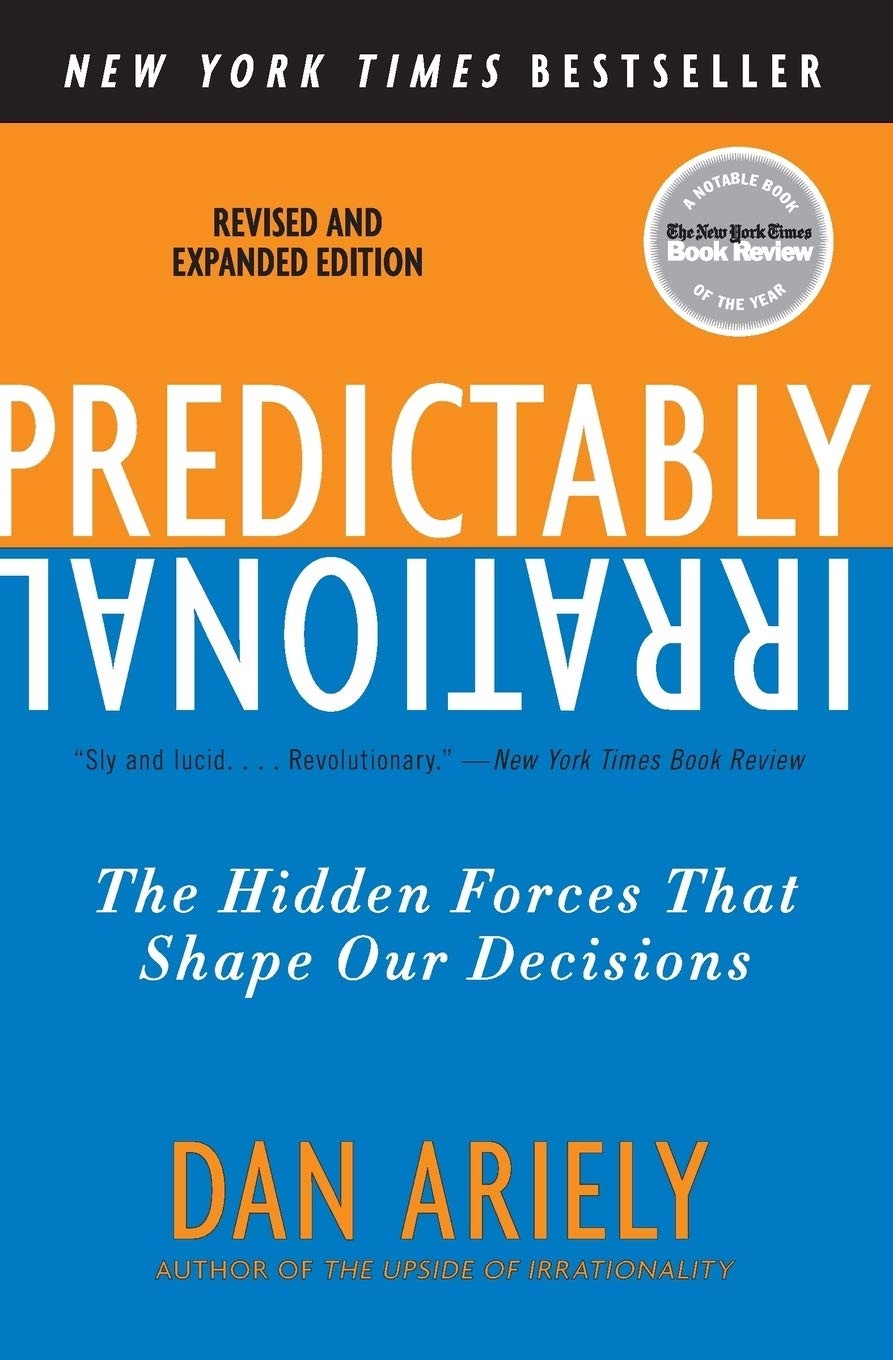
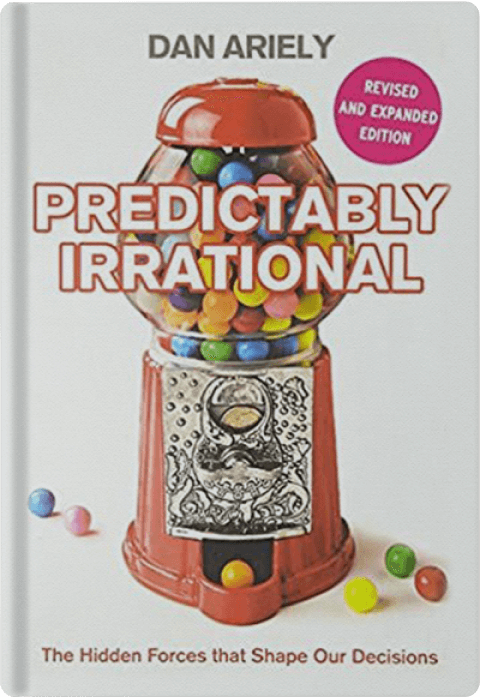
Predictably Irrational
The Hidden Forces That Shape Our Decisions
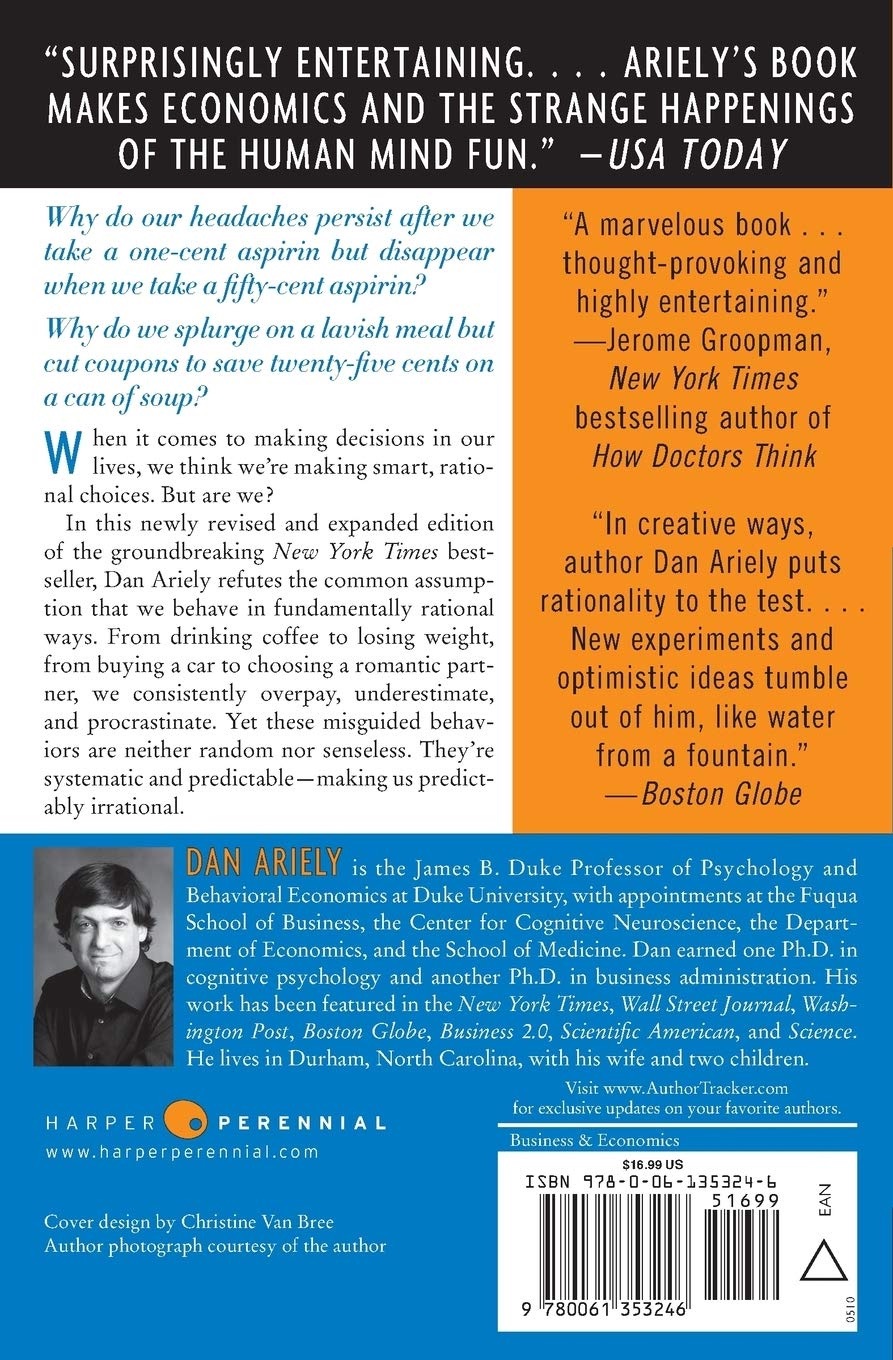
When it comes to making decisions in our lives, we think we're making smart, rational choices. But are we?
In this groundbreaking New York Times bestseller, Dan Ariely challenges readers' assumptions about making decisions based on rational thought. Entertaining and surprising, the book unmasks the subtle but powerful tricks that our minds play on us and challenges the common beliefs that we behave in fundamentally rational ways.








About Dan
I do research in behavioral economics and try to describe it in plain language. These findings have enriched my life, and my hope is that they will do the same for you.
My immersive introduction to irrationality took place many years ago while I was overcoming injuries sustained in an explosion. The range of treatments in the burn department, and particularly the daily “bath” made me face a variety of irrational behaviors that were immensely painful and persistent. Upon leaving the hospital, I wanted to understand how to better deliver painful and unavoidable treatments to patients, so I began conducting research in this area.
I became engrossed with the idea that we repeatedly and predictably make the wrong decisions in many aspects of our lives and that research could help change some of these patterns.
Once I realized that understanding decision-making can help me live in a better way, I started working on how to get all of us to use the same basic knowledge to improve our daily life.
Dan Ariely is a professor of psychology and behavioral economics at
Duke University and a founding member of the Center for Advanced Hindsight.
He
is the author of the bestsellers Irrationally Yours, Payoff, The Upside of
Irrationality, The (Honest) Truth About Dishonesty, Dollars and Sense and Amazing
Decisions. He is also a co-creator of the movie Dishonesty and the card game
Irrational Game.
International Covers

 Israel
 India
India

 Japan
Japan

 Bulgaria
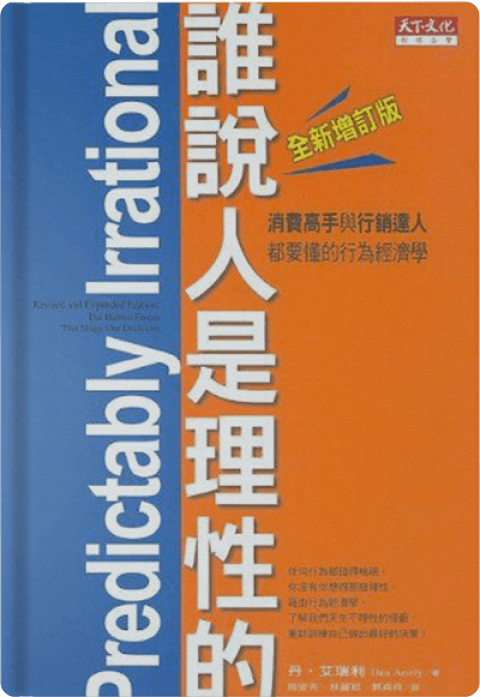
 China
China